Plain bearing/bushings From Wikipedia
- Last update: 2019-08-29 15:38:35
A bushing, also known as a bush, is an independent plain bearing that is inserted into a housing to provide a bearing surface for rotary applications; this is the most common form of a plain bearing.[6] Common designs include solid (sleeve and flanged), s
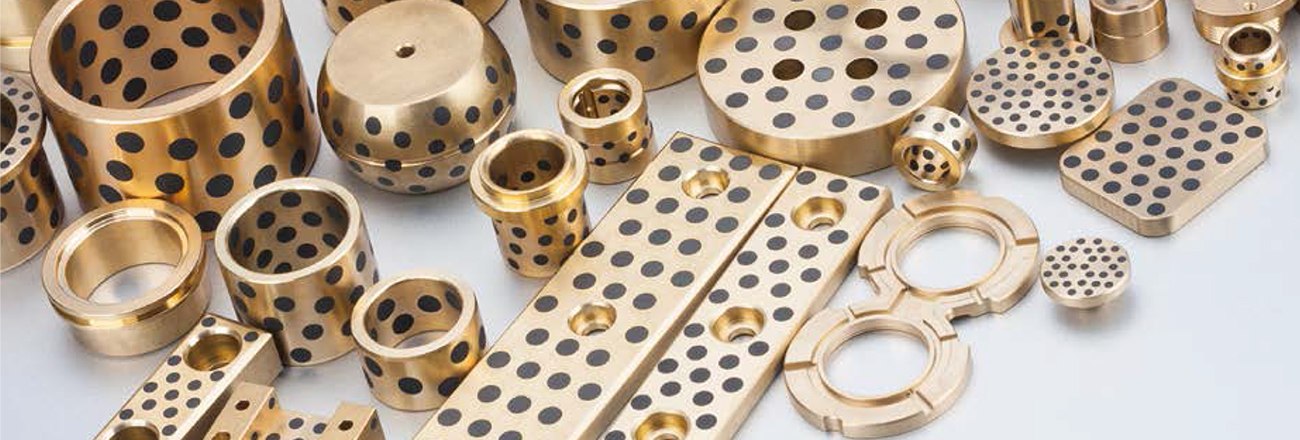
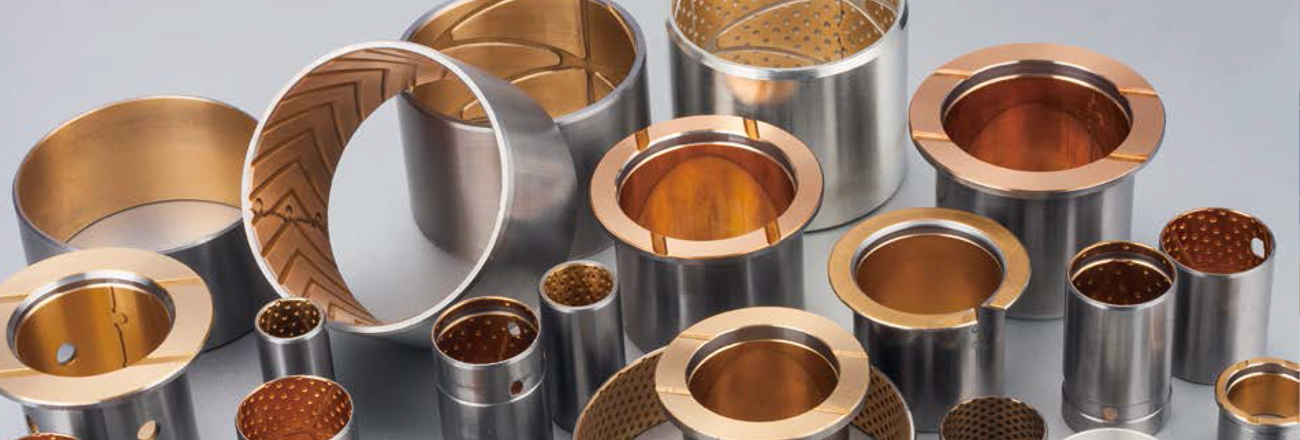
A bushing, also known as a bush, is an independent plain bearing that is inserted into a housing to provide a bearing surface for rotary applications; this is the most common form of a plain bearing.[6] Common designs include solid (sleeve and flanged), split, and clenched bushings. A sleeve, split, or clenched bushing is only a "sleeve" of material with an inner diameter (ID), outer diameter (OD), and length. The difference between the three types is that a solid sleeved bushing is solid all the way around, a split bushing has a cut along its length, and a clenched bearing is similar to a split bushing but with a clench across the cut. A flanged bushing is a sleeve bushing with a flange at one end extending radially outward from the OD. The flange is used to positively locate the bushing when it is installed or to provide a thrust bearing surface.[7]
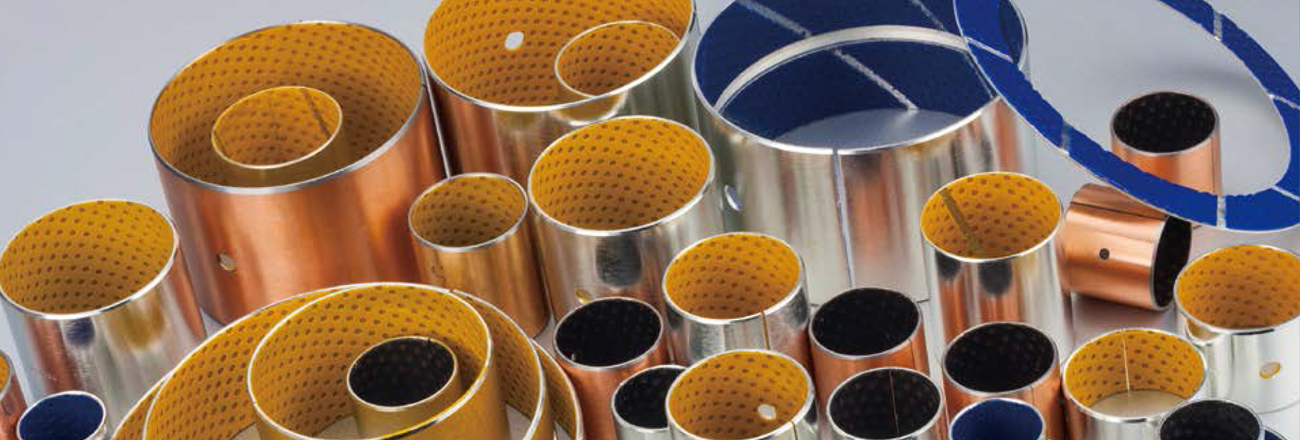
Bi-material bearings consist of two materials, a metal shell and a plastic bearing surface. Common combinations include a steel-backed PTFE-coated bronze and aluminum-backed Frelon.[14] Steel-backed PTFE-coated bronze bearings are rated for more load than most other bi-metal bearings and are used for rotary and oscillating motions. Aluminum-backed frelon are commonly used in corrosive environments because the Frelon is chemically inert.[15]